

Tasting Report: Top Grower Champagne
By Patrick Qureshi, WSET2
Grower Champagne is more popular than ever, and for that reason we wanted to dedicate an evening to getting better acquainted with the very top of the grower movement.
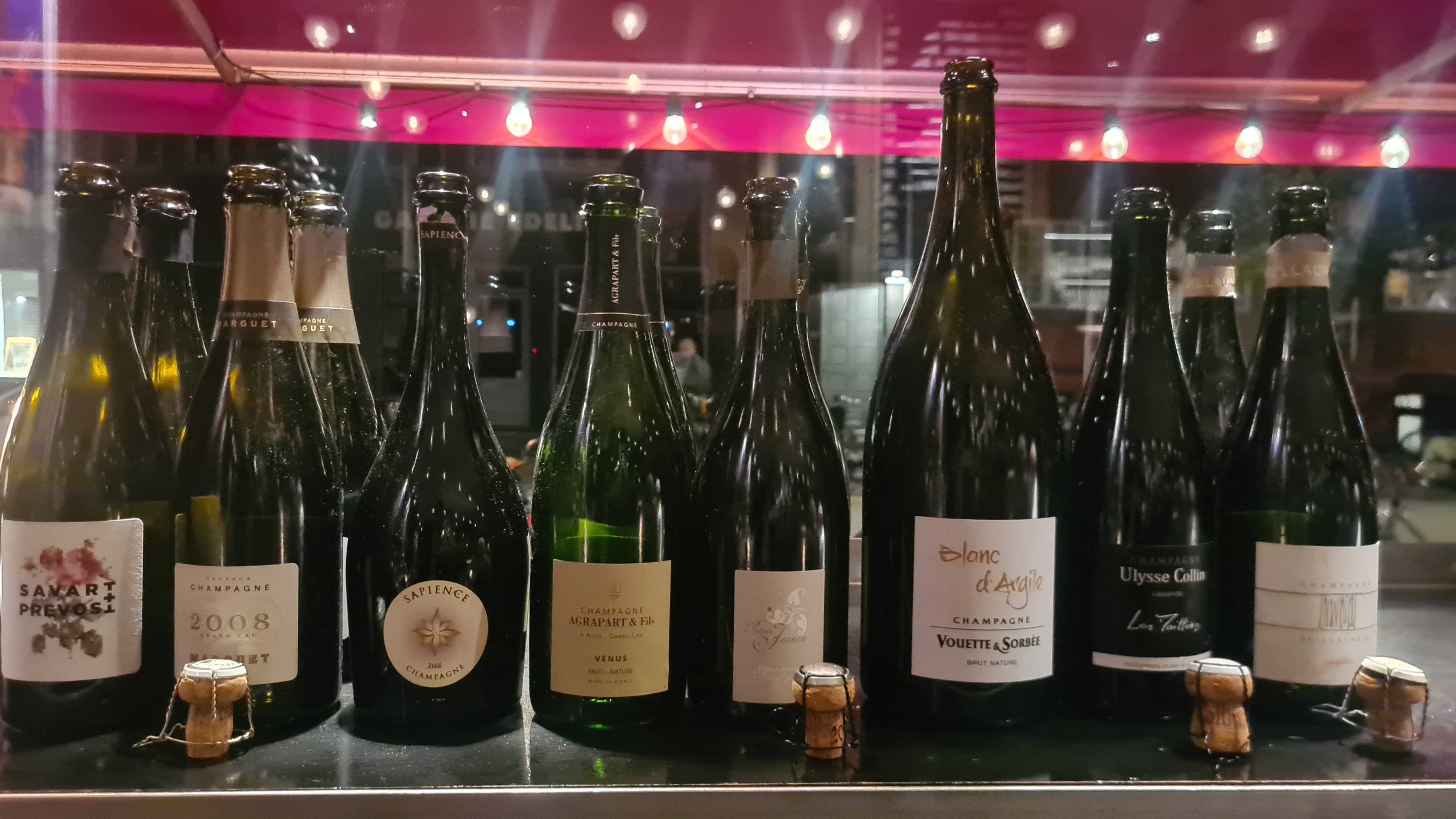
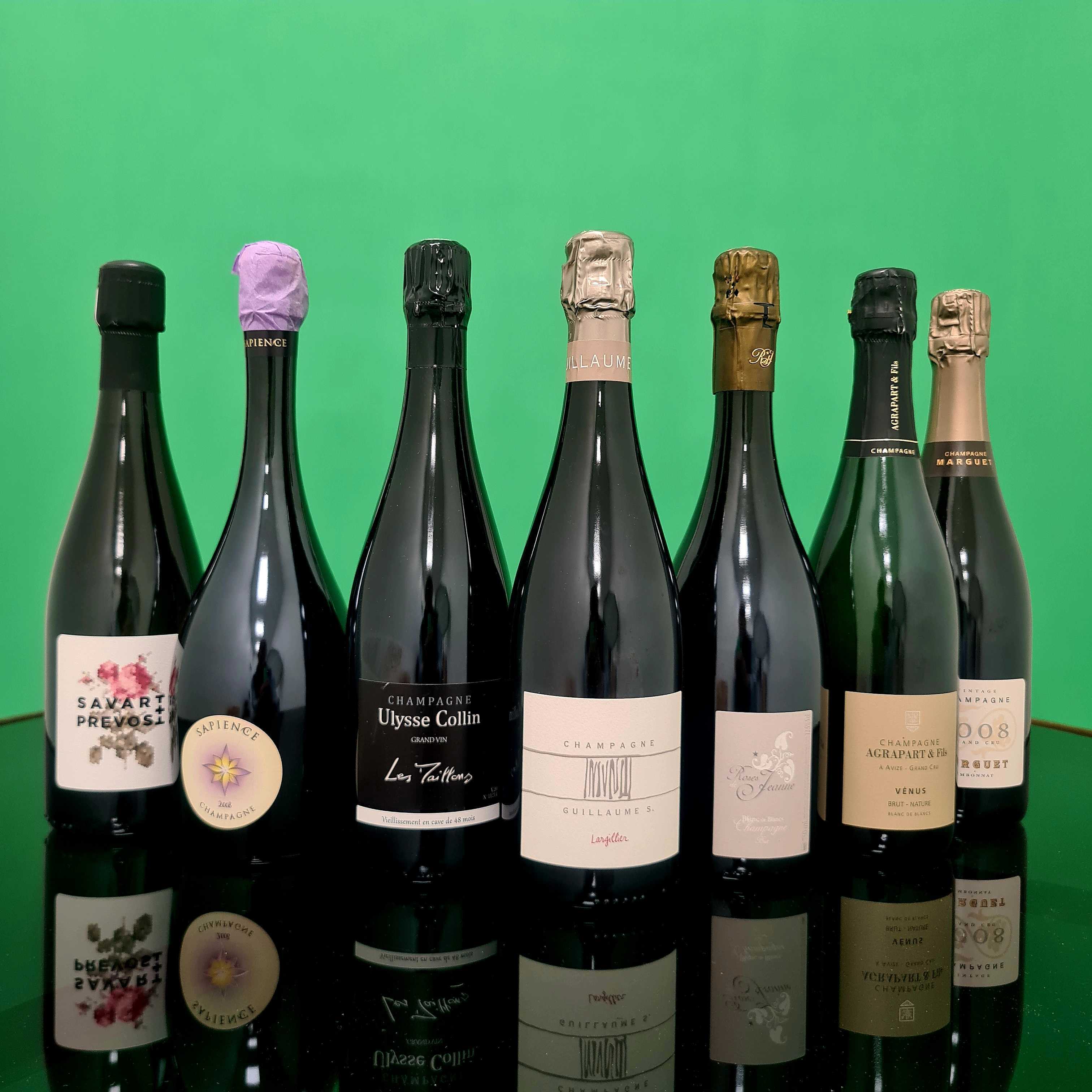
With names like Savart, Prevost, Marguet, Cédric Bouchard, Agrapart, Ulysse Collin, and Guillaume Selosse on the tasting programme, a memorable evening awaited the Champagne-loving guests.
The Concept of Grower Champagne
Behind most famous Champagne labels stand the great houses, which buy grapes from hundreds of small growers and blend them into a recognisable house style, year after year. The concept of grower Champagne turns that logic on its head. Here the producer grows, harvests, and makes the wine from their own vineyards, often in very small quantities compared with the large houses. On the bottle you can typically spot them by the letters RM, récoltant manipulant, which signal that it is the grower themselves, and not a large trading house, who has had a hand in the entire process from vine to bottle.
It is precisely this focus that gives grower Champagne its distinctive character. Because the grapes come from clearly defined parcels, terroir emerges more clearly, meaning the soil, location, and microclimate leave an imprint you can actually taste. The smaller productions also allow greater freedom to work with an individual style and to experiment, in contrast to the more uniform and consistent style the large houses typically pursue.
It is no coincidence that interest in grower Champagne has grown so markedly in recent years. More and more wine enthusiasts are seeking authenticity, craftsmanship, and a clearer imprint of both vineyard and producer, rather than the more polished recognisability found in the Champagne of the big houses.
With that in mind, we sat down at the table with a clear purpose: to taste the grower producers who best unite terroir and personality in the glass. Below you will find our collected impressions from the tasting.
Welcome
Savart+Prevost
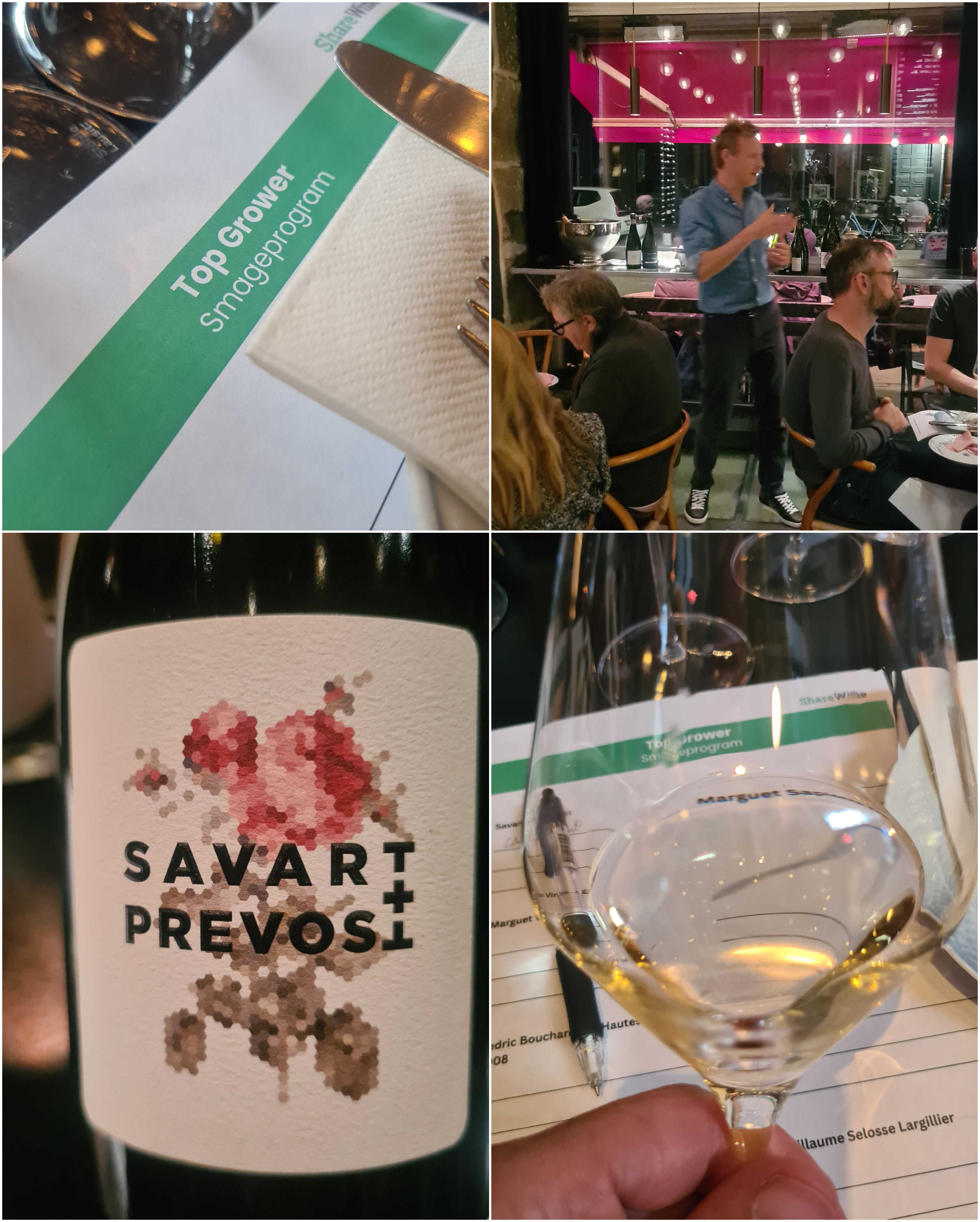
The doors to the lovely rooms at R vinbar had opened, seats around the tables were taken, and expectations ran high for the evening's line-up. The first Champagne presented was the new and much-hyped bottling named Savart+Prevost, created in collaboration between two of the great names on the grower scene.
Frédéric Savart works mainly with Pinot Noir, while Prevost has become known for his unique results with Meunier-based wines, and for this Champagne it is the Chardonnay grape they have chosen as the starting point for their collaboration. The vintage was 2016, disgorged in 2026.
An inviting, straightforward, and very fresh Champagne with a fine expression that worked well as the first wine in the glass. There was general agreement that it will be exciting to follow the development of this unique wine after a few more years in bottle.
First Flight
Benoît Marguet
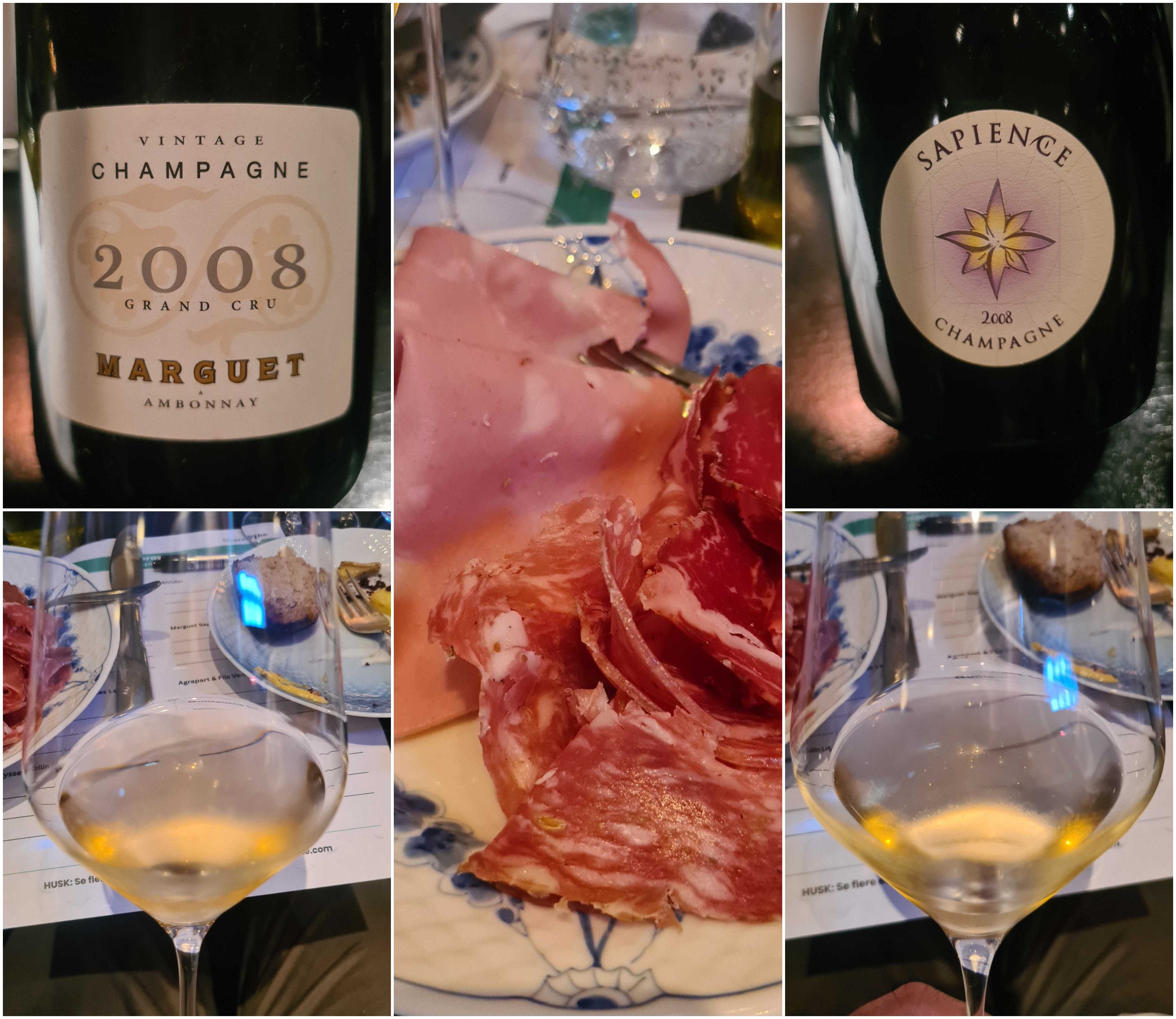
For the first Champagne flight we were to take the temperature of the great 2008 vintage, in the form of two wines from the hand of Benoît Marguet, namely his Ambrocius 2008 and Sapience 2008.
Benoît Marguet runs his domaine in Ambonnay and stands today as one of the most distinct names in the biodynamic grower movement. Here the vineyards are worked with horses and without chemicals, and in the cellar he works with minimal intervention, spontaneous fermentation, and long ageing on the lees.
The contrast from the welcome Champagne was striking when these two glasses arrived at the table. The colour in the glasses was more golden, and the secondary notes far more pronounced.
The 2008 vintage is one of the greatest Champagne vintages of recent times, and it is always fascinating to follow. Both glasses sat at a very similar stage of development, perhaps with a touch more freshness in the Ambrocius, which surprised several around the table, since it had been disgorged all the way back in 2013.
Both glasses showed a beautiful level, very rich and intense. Deep and complex, with plenty of toasted nuts and brioche. Two enormously interesting wines that stood proudly within their drinking window. Perhaps a shade more intensity in Marguet's prestige cuvée Sapience, but otherwise a flight without a clear winner.
Conversation around the tables was in full swing, and impressions from the first flight were shared back and forth. At the same time, a series of delicious plates from the R vinbar kitchen had arrived at the tables, where guests were treated to a generous selection of cheeses, charcuterie, and rillette. Now it was time for the evening's next flight.
Second Flight
The evening's next flight was an exciting matchup between two of the great figures of the grower movement, Cédric Bouchard and Agrapart.
Cédric Bouchard
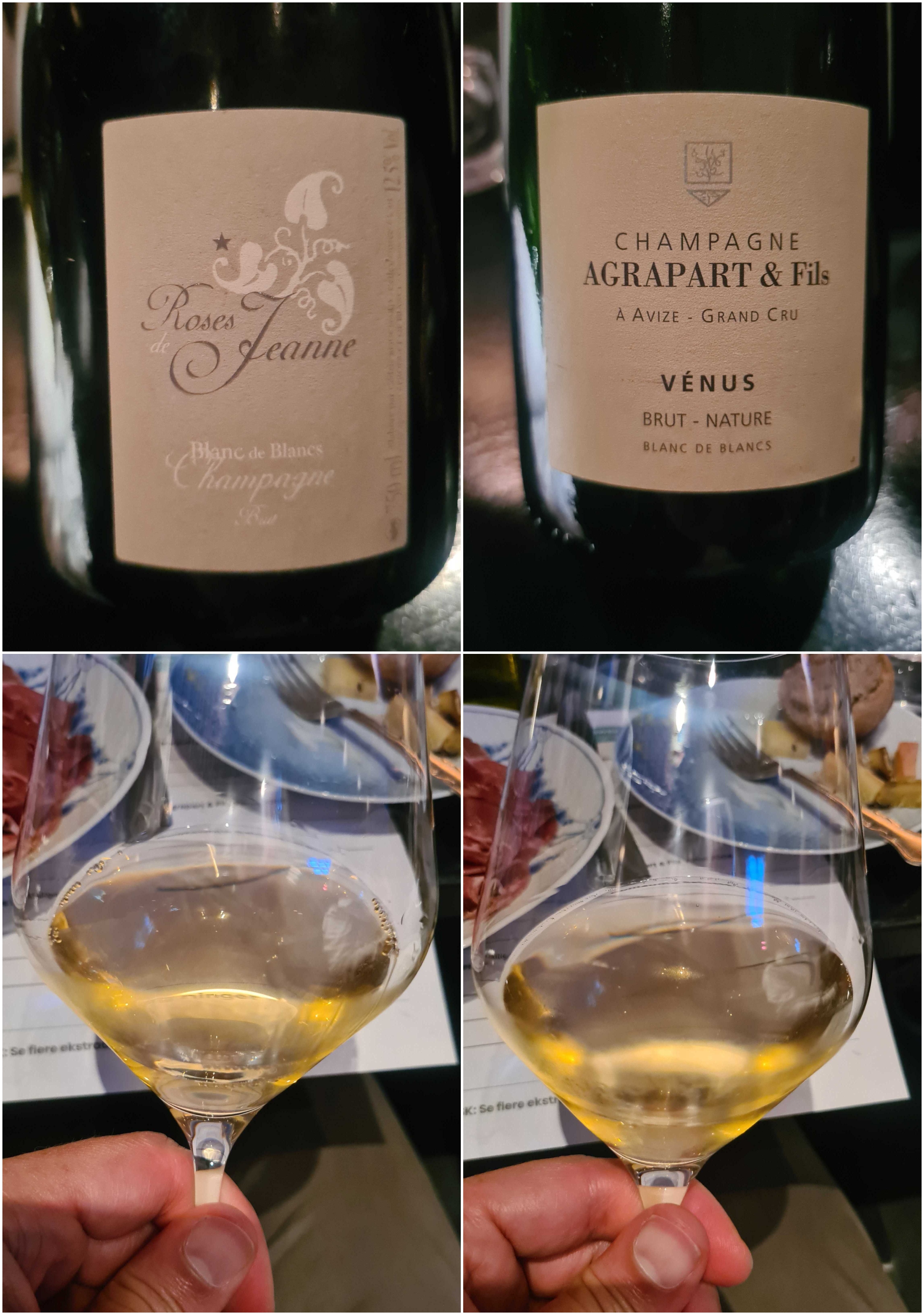
Cédric Bouchard is one of the most uncompromising figures in the entire grower movement, and a producer many enthusiasts speak of with almost religious respect. From his small domaine Roses de Jeanne in the Aube, he makes Champagne according to a radical philosophy: one grape variety, one vineyard, one vintage. No blending, no shortcuts, only the pure imprint of a single parcel. Yields are kept unusually low, and the productions are so small that the bottles quickly become collector's items.
Bouchard's Les Hautes Lemblé 2008 (disgorged 2012). Les Hautes Lemblé, made from 100% Chardonnay, is a rare bottle from Cédric Bouchard's hand, and only a few of the evening's guests had tasted this Champagne before.
Here the 100% Chardonnay brought more freshness than the previous flight, and this glass was one of the evening's highlights, with the Champagne undergoing an enormous development in the glass and truly making an impression. Les Hautes Lemblé showed a very high level, with lovely floral notes, toasted nuts, and a creamy, impressively long finish.
Agrapart & Fils (disgorged 2014)
From his domaine in Avize, the heart of the Côte des Blancs, Agrapart grows only Chardonnay on grand cru vineyards with chalky subsoil, and his philosophy is built on the soil rather than cellar technique. Agrapart works with low yields, ploughing without herbicides, spontaneous fermentation with wild yeast, and ageing in barrel, all to let the vineyard speak as purely as possible.
Vénus is the domaine's most iconic and rarest wine, named after the horse that ploughs the single parcel the wine comes from. This very focus on the single vineyard and horse ploughing makes Vénus one of the purest expressions in all of Champagne.
On the night, Vénus delivered a great experience. It was more mineral, pure, and elegant, with an energetic acidity. Here were notes of white flowers, lemon, and a saline finish.
The Blind Pour
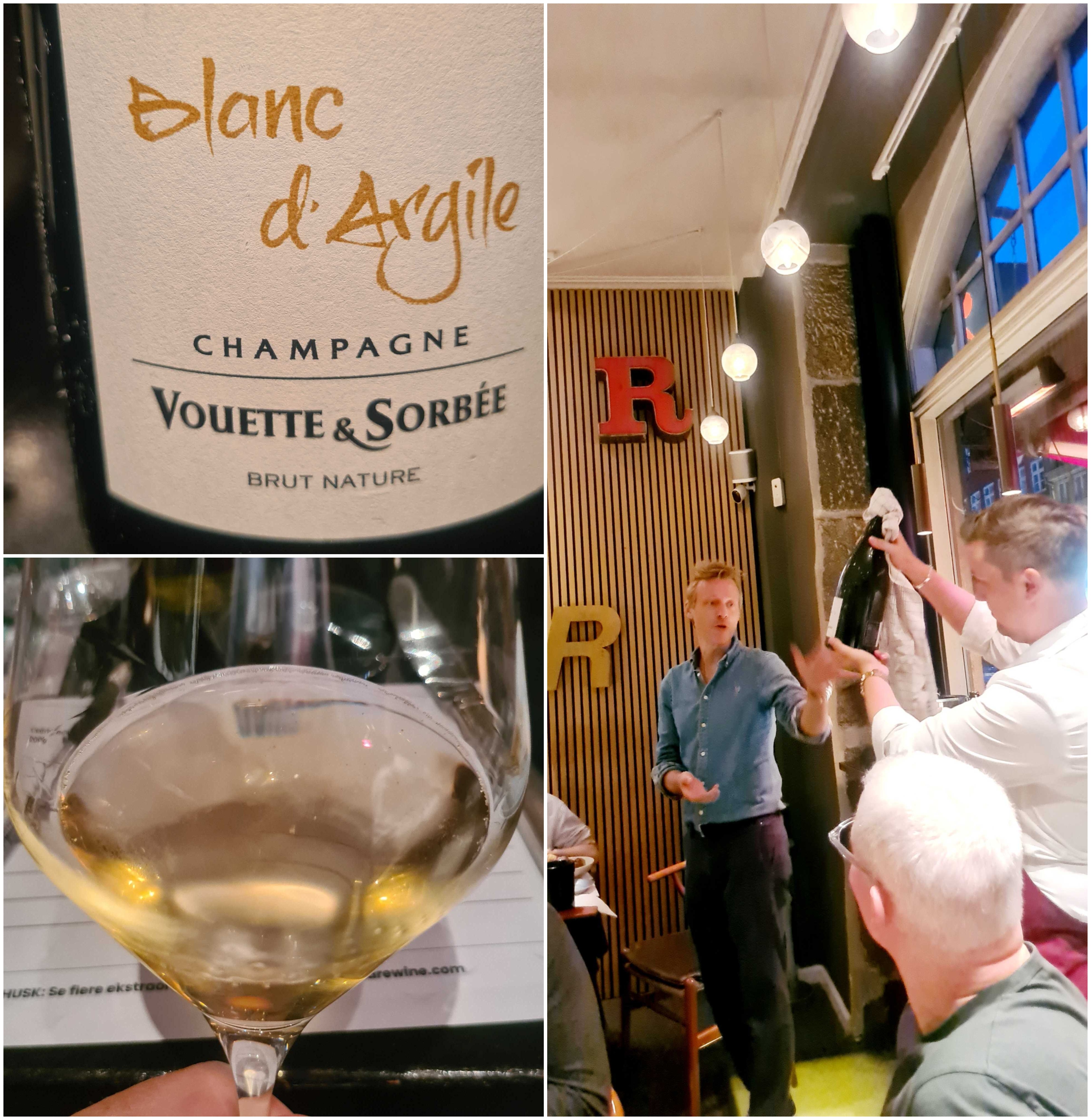
For this tasting we had also slipped a little ShareWine surprise into the evening, in the form of a blind Champagne served from magnum.
This Champagne had an enormous freshness, most likely a result of the magnum format. There was broad agreement among the guests that this was a blanc de blancs, but no one guessed the producer, which turned out to be Vouette & Sorbée Blanc d'Argile 2015.
The impression from this glass was fresh, chalky, pure, and mineral, and it worked perfectly as a palate cleanser after both the food and the flavour impressions from the earlier flights.
Third Flight
The evening's final flight was a contest between two of the truly great names, Guillaume Selosse and Ulysse Collin.
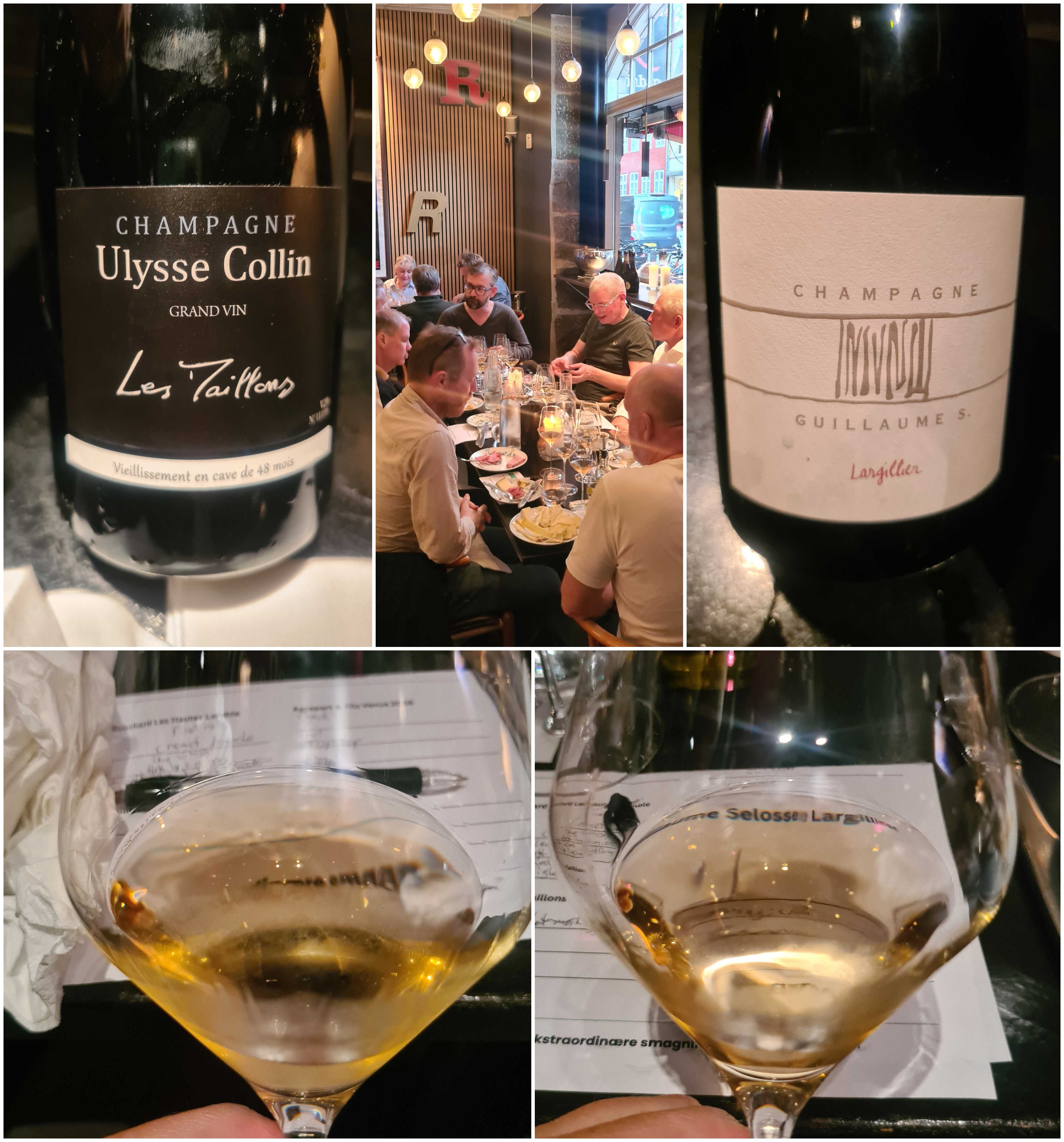
Ulysse Collin (disgorged 2025)
With his domaine in Congy, winemaker Olivier Collin has achieved almost cult status among enthusiasts. In the mid-2000s, Collin withdrew his vineyards from the large house they had previously been leased to, and then began making Champagne from his own parcels. He works with low yields, spontaneous fermentation with wild yeast, and long ageing in old barrels, always with the single vineyard as the focal point, so that soil and location are allowed to speak clearly.
Les Maillons is the domaine's blanc de noirs, made exclusively from Pinot Noir from a single parcel with sandy soil in the village of Barbonne-Fayel. It is precisely this soil that helps create a Champagne with breadth and depth, yet at the same time very fine and mineral. The colour was beautiful and golden, and the Champagne developed handsomely in the glass. A delicious, inviting, and lovely Champagne with a long finish.
Guillaume Selosse (disgorged 2020)
Guillaume Selosse carries one of the most legendary names in all of Champagne. He is the son of Anselme Selosse from the cult estate Jacques Selosse in Avize, and he grew up in the very midst of the movement that truly put grower Champagne on the world map. Today Guillaume works with his own vineyards in the heart of the Côte des Blancs, and although the legacy is a heavy one, he has quickly proven himself an independent and visionary winemaker in his own right. He works with low yields, spontaneous fermentation, and long ageing in barrel, always with respect for the chalk and the terroir from which the grapes come. The very small productions make the bottles hard to come by and highly sought after among the collectors on ShareWine.
Largillier is a single-vineyard Champagne, named after the parcel in Cotes de bar it comes from, and it is a blanc de noir on classic grand cru soil with chalky subsoil. This single-vineyard focus gives the Champagne a pure and precise expression, where soil and location speak clearly through the wine. The bottle poured this evening was disgorged in 2020.
The tasting's final glass of Champagne had now been poured, and anticipation was high. The aroma in the glass was enormously impressive and highly aromatic. What a nose, what a Champagne!
"Outstanding," exclaimed one of the guests, and I fully understood his enthusiasm.
There were several nominations for Champagne of the evening, but Largillier was the favourite for most, myself included. My notes for this glass read: "WOW. Magical. Fantastic," which sums up rather well just how impressed I was. This glass was quite simply enormous, and for me Selosse was a clear winner in this flight. In fairness, though, it should be said that the five-year difference in disgorgement naturally plays a role here, giving Selosse more time to develop.
With Champagnes like this one, I fully understand the fascination for grower Champagne and its powerful appeal.
A big thank you to all the guests for a wonderful evening. See you at the next ShareWine tasting!