Opbevaret oprigtig 🍇
Stand C/D
Blandt Bordeaux’ mest anerkendte ejendomme indtager dette slot en fast plads i Pauillac med sin status som 1. Cru Classé fra 1855-klassifikationen. Vinen fremstilles efter klassiske Medoc-principper med en overvægt af Cabernet Sauvignon, suppleres typisk af Merlot samt mindre andele Cabernet Franc og Petit Verdot. Gæringen foregår i egetræsfade, og den videre modning strækker sig ofte op mod 20 måneder på barriques.
1969 var i området præget af udfordrende vejrforhold, og årgangen regnes overordnet for ganske gennemsnitlig, hvor kølige temperaturer og regn prægede sæsonen. Det betyder, at vinene typisk fremstår lettere i strukturen, med afdæmpet frugtsødme og relativt tidligt drikkemodne tanniner. For denne årgang gælder, at lagringsegenskaberne er begrænsede, og vinen bør i dag vurderes som moden eller endda muligvis over sit optimale udviklingspunkt, afhængig af opbevaringsforhold.
Smuk i både næse og mund, der afgiver aromaer af kakao kaffe, tobak. På ganen er det først meget typisk for en gammel vin, men efter det forbløffer den med balance og en elegant og subtil længde for en racy finish på tanniner.
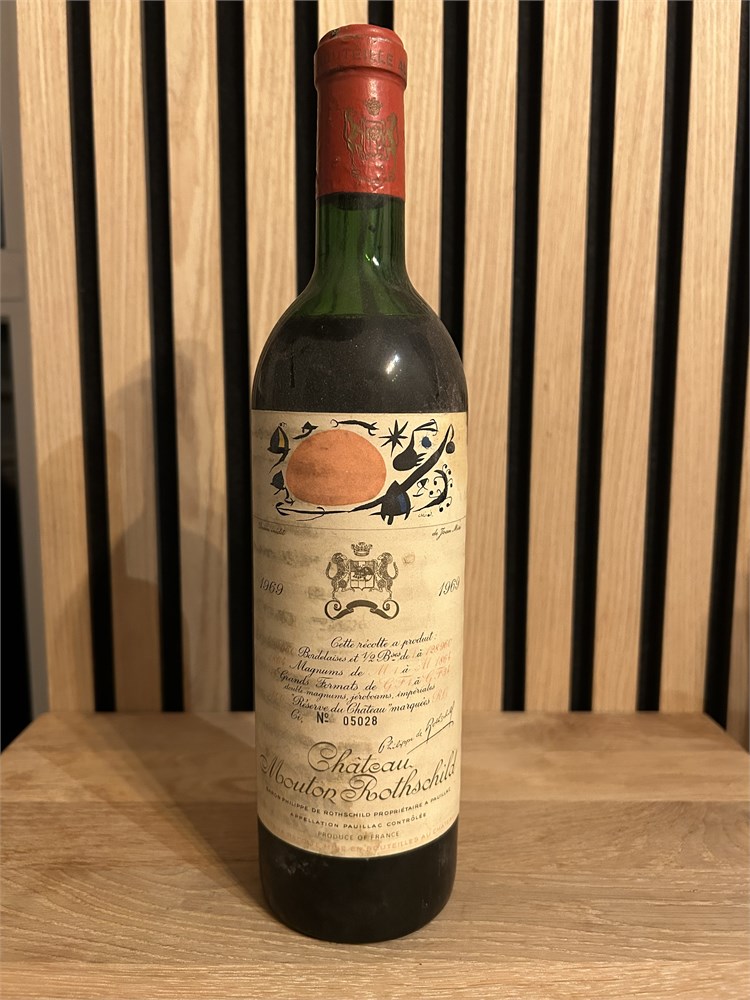
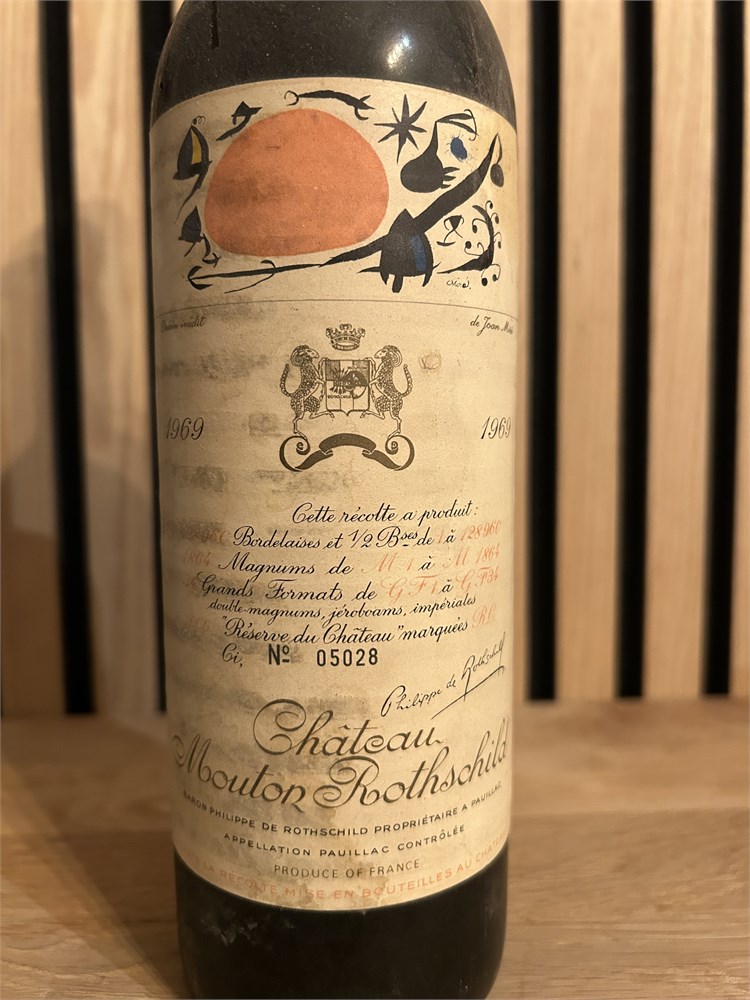
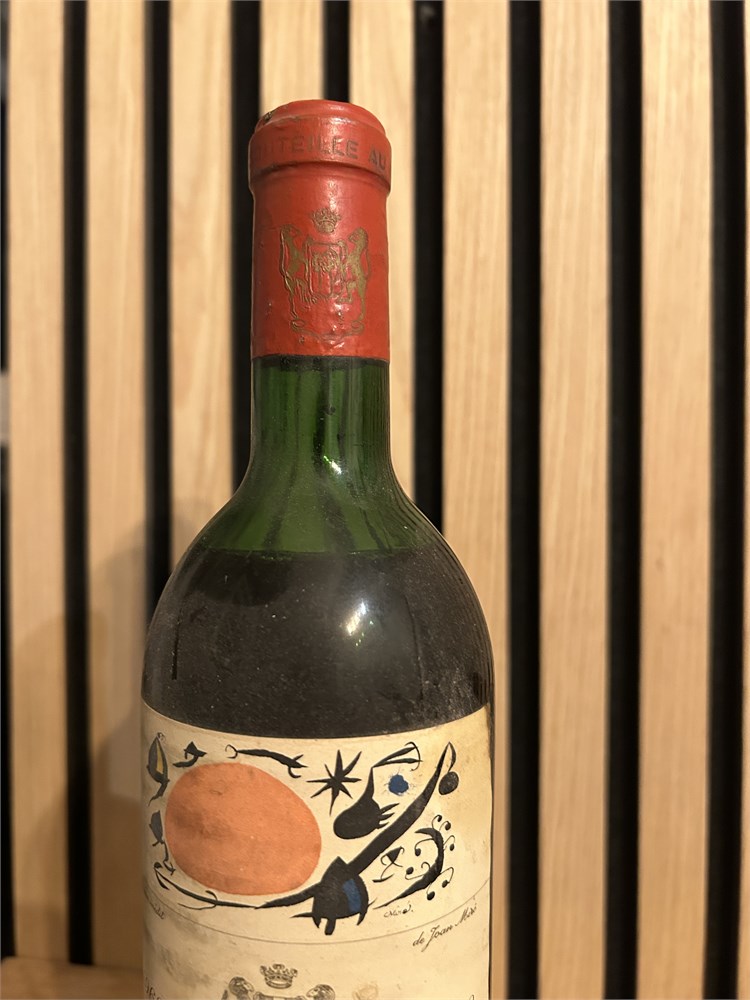
Illustration af etikette: Joan Miró
Kept sincere 🍇
Stand C/D
Among Bordeaux's most renowned properties, this château occupies a permanent place in Pauillac with its status as 1st Cru Classé from the 1855 classification. The wine is produced according to classic Medoc principles with a predominance of Cabernet Sauvignon, typically supplemented by Merlot and smaller proportions of Cabernet Franc and Petit Verdot. Fermentation takes place in oak barrels, and further maturation often extends to 20 months in barriques.
1969 was a challenging year in the area, and the vintage is generally considered to be quite average, with cool temperatures and rain characterizing the season. This means that the wines typically appear lighter in structure, with subdued fruit sweetness and relatively early-ripening tannins. For this vintage, the aging properties are limited, and the wine should today be considered ripe or even possibly above its optimal development point, depending on storage conditions.
Beautiful in both the nose and mouth, giving off aromas of cocoa coffee, tobacco. On the palate it is at first very typical of an old wine, but after that it amazes with balance and an elegant and subtle length for a racy finish on tannins.
Illustration of label: Joan Miró
Mantenuto sincero 🍇
Stand C/D
Tra le proprietà più rinomate di Bordeaux, questo château occupa un posto fisso a Pauillac, con il suo status di 1° Cru Classé dalla classificazione del 1855. Il vino è prodotto secondo i classici principi del Médoc, con una predominanza di Cabernet Sauvignon, tipicamente integrato da Merlot e da percentuali minori di Cabernet Franc e Petit Verdot. La fermentazione avviene in botti di rovere e l'ulteriore affinamento si estende spesso fino a 20 mesi in barrique.
Il 1969 è stato un anno impegnativo nella zona, e l'annata è generalmente considerata piuttosto nella media, con temperature fresche e pioggia che hanno caratterizzato la stagione. Ciò significa che i vini appaiono tipicamente più leggeri nella struttura, con una dolcezza fruttata attenuata e tannini a maturazione relativamente precoce. Per questa annata, le proprietà di invecchiamento sono limitate, e il vino dovrebbe oggi essere considerato maturo o addirittura al di sopra del suo punto di sviluppo ottimale, a seconda delle condizioni di conservazione.
Splendido sia al naso che in bocca, sprigiona aromi di cacao, caffè e tabacco. Al palato è inizialmente tipico di un vino invecchiato, ma poi stupisce per l'equilibrio e una lunghezza elegante e sottile per un finale vivace sui tannini.
Illustrazione dell'etichetta: Joan Miró
Resté sincère 🍇
Support C/D
Parmi les propriétés les plus prestigieuses de Bordeaux, ce château occupe une place de choix à Pauillac grâce à son statut de 1er Cru Classé depuis le classement de 1855. Le vin est élaboré selon les principes classiques du Médoc, avec une prédominance de Cabernet Sauvignon, généralement complétée par du Merlot et, en plus faibles proportions, par du Cabernet Franc et du Petit Verdot. La fermentation se déroule en fûts de chêne, et l'élevage se poursuit souvent jusqu'à 20 mois en barriques.
1969 fut une année difficile pour la région, et le millésime est généralement considéré comme assez moyen, caractérisé par des températures fraîches et des pluies abondantes. De ce fait, les vins présentent généralement une structure plus légère, une douceur fruitée discrète et des tanins relativement précoces. Pour ce millésime, le potentiel de garde est limité, et le vin devrait aujourd'hui être considéré comme mûr, voire même au-delà de son point de maturité optimal, selon les conditions de conservation.
Magnifique au nez comme en bouche, il exhale des arômes de cacao, de café et de tabac. En bouche, il est d'abord très typique d'un vieux vin, mais surprend ensuite par son équilibre et une longueur élégante et subtile, se terminant sur une finale racée aux tanins.
Illustration de l'étiquette : Joan Miró

 Protection de l'acheteur ShareWine