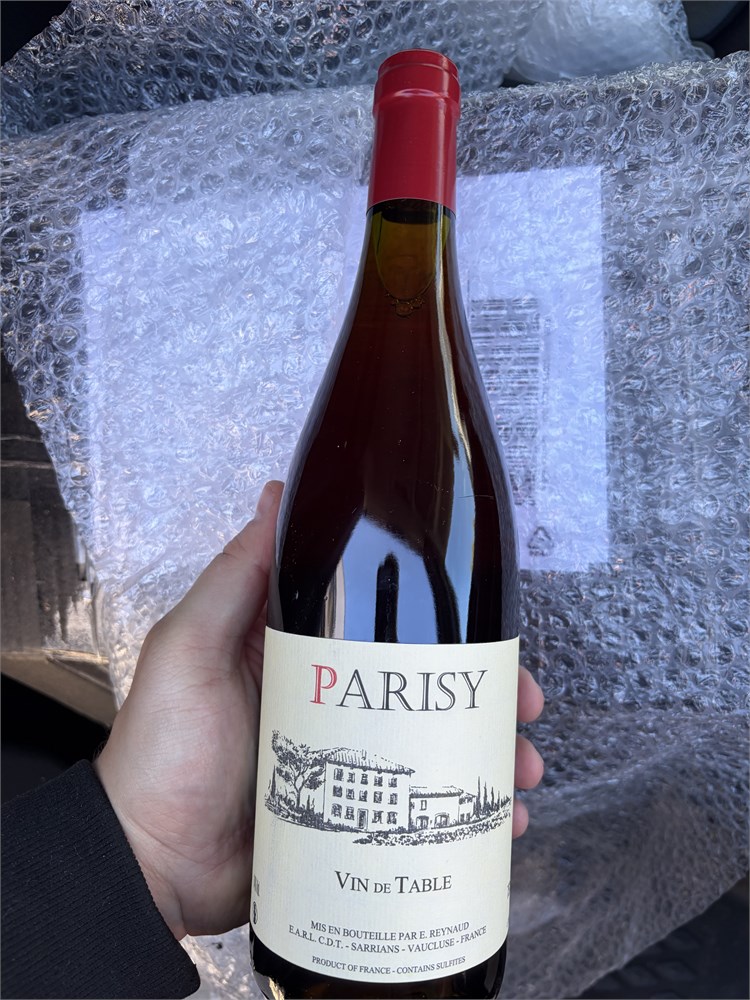
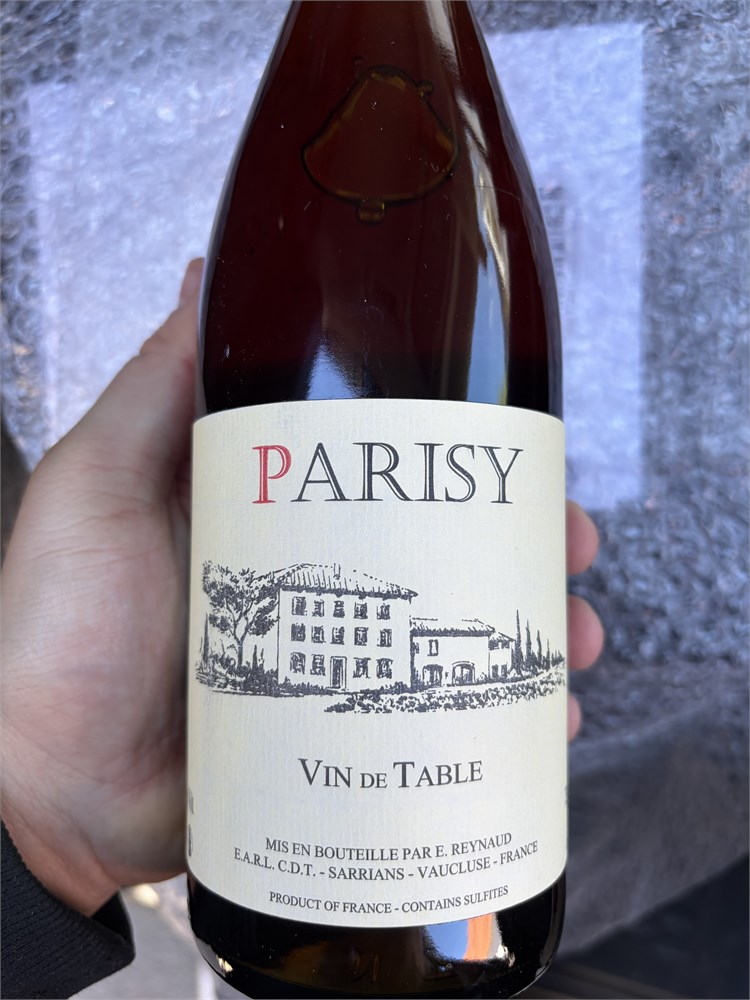
Château des Tours har hjemme i det sydlige Rhône, hvor Emmanuel Reynaud står bag en portefølje præget af traditionel tilgang og sjældent lav intervention i kælderen. Parisy udgør husets klassiske rosé, hvor hovedvægten typisk ligger på Grenache, tilsat mindre andele Cinsault og andre lokale druer. Vinificeringen udføres efter metoder inspireret af ældre tiders Rhône-rosé, hvor kontakten mellem most og skaller er præcis afmålt for at bevare friskhed uden at opnå for meget tannin eller farve. Stilistisk adskiller vinen sig fra langt de fleste moderne roséer ved at have let orange nuancer og større kompleksitet, ofte med noter af stenfrugt, urter og iblandede krydrede undertoner. Det er en vin, der vinder ved nydelse over 1-3 år efter aftapning, hvor balancen mellem frugt og struktur er mest harmonisk.
Årgangen kan svinge en del, men producentens faste hånd sikrer næsten altid umiddelbar drikkeglæde og et udtryk af Rhône-terroir uden nogen form for overvægt af teknik eller manipulation.
Château des Tours is based in the southern Rhône, where Emmanuel Reynaud is behind a portfolio characterized by a traditional approach and rarely low intervention in the cellar. Parisy is the house's classic rosé, where the main emphasis is typically on Grenache, with smaller proportions of Cinsault and other local grapes added. The vinification is carried out according to methods inspired by the Rhône rosé of old, where the contact between must and skins is precisely measured to preserve freshness without achieving too much tannin or color. Stylistically, the wine differs from the vast majority of modern rosés by having slightly orange nuances and greater complexity, often with notes of stone fruit, herbs and mixed spicy undertones. It is a wine that benefits when enjoyed over 1-3 years after bottling, where the balance between fruit and structure is most harmonious.
The vintage can fluctuate quite a bit, but the producer's steady hand almost always ensures immediate drinking pleasure and an expression of Rhône terroir without any predominance of technique or manipulation.
Château des Tours ha sede nella Valle del Rodano meridionale, dove Emmanuel Reynaud è a capo di un portfolio caratterizzato da un approccio tradizionale e da un intervento minimo in cantina. Parisy è il rosé classico della maison, in cui l'enfasi principale è tipicamente sul Grenache, con piccole percentuali di Cinsault e altri vitigni autoctoni. La vinificazione viene effettuata secondo metodi ispirati ai rosé del Rodano di un tempo, dove il contatto tra mosto e bucce è dosato con precisione per preservare la freschezza senza un eccesso di tannini o colore. Stilisticamente, il vino si distingue dalla maggior parte dei rosé moderni per le sue leggere sfumature aranciate e la maggiore complessità, spesso con note di frutta a nocciolo, erbe aromatiche e sentori speziati. È un vino che si apprezza al meglio se degustato da 1 a 3 anni dopo l'imbottigliamento, periodo in cui l'equilibrio tra frutto e struttura è più armonioso.
L'annata può variare considerevolmente, ma la mano ferma del produttore garantisce quasi sempre un piacere immediato al palato e un'espressione del terroir del Rodano senza alcuna predominanza di tecniche o manipolazioni.
Le Château des Tours est situé dans le sud de la vallée du Rhône, où Emmanuel Reynaud élabore une gamme de vins caractérisée par une approche traditionnelle et une vinification peu interventionniste. Parisy est le rosé emblématique de la maison, dominé par le Grenache, complété par de plus petites proportions de Cinsault et d'autres cépages locaux. La vinification est réalisée selon des méthodes inspirées des rosés rhodaniens d'antan, où le contact entre le moût et les peaux est précisément dosé afin de préserver la fraîcheur sans excès de tanins ni de couleur. Stylistiquement, ce vin se distingue de la plupart des rosés modernes par ses subtiles nuances orangées et sa grande complexité, avec des notes de fruits à noyau, d'herbes et d'épices. C'est un vin qui s'épanouit pleinement dans les 1 à 3 ans suivant sa mise en bouteille, période où l'équilibre entre le fruit et la structure est le plus harmonieux.
Le millésime peut varier considérablement, mais la main sûre du producteur garantit presque toujours un plaisir de dégustation immédiat et une expression du terroir rhodanien sans aucune prédominance de la technique ou de la manipulation.

 Protection de l'acheteur ShareWine