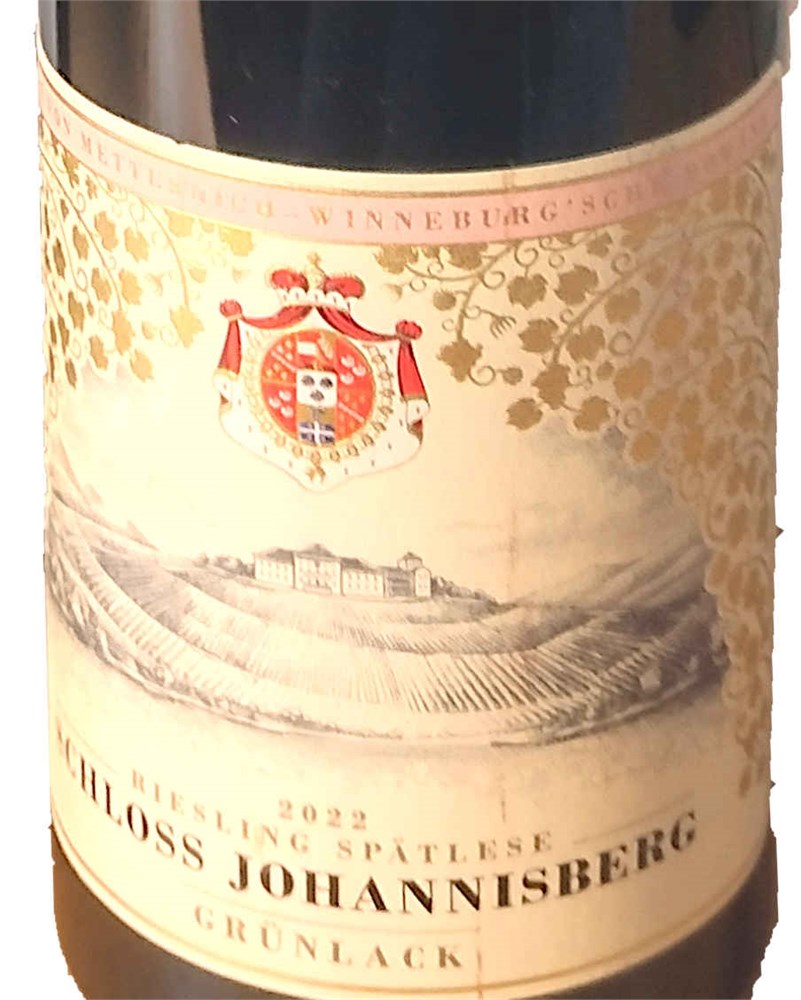
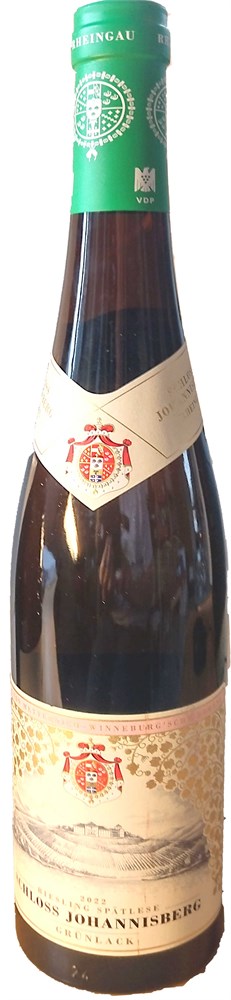
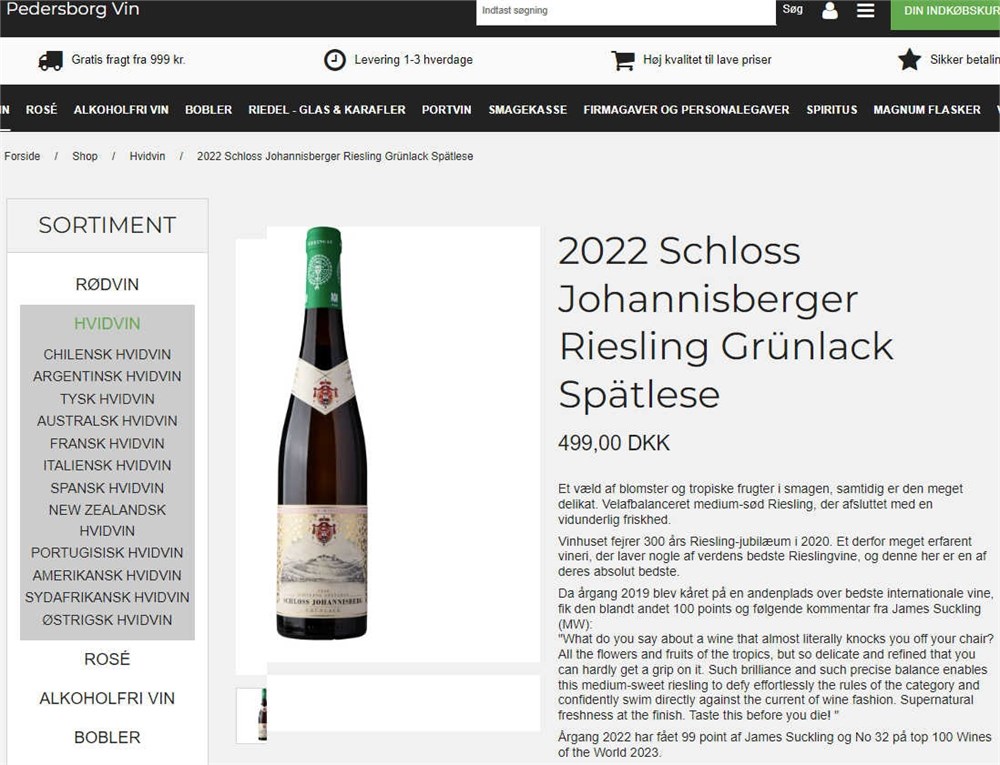
94+p/Parker: "Fabulous", 99p/JamesSuckling, 94p/Falstaff. Pris i Danmark; 499, global pris 400 (årg 22) -egentlig lav pris for exceptionel vin!
En historisk klassiker fra et af Verdens fineste vinslotte, som nu leverer nogle af Tyskland -og Verdens- fineste hvidvine, år for år stadig finere vine, siden den brillante vinmager/direktør Stefan Doktor kom til i 2008.
Den klassiske store riesling. Et væld af blomster og tropisk frugt i aroma og smag, utroligt elegant, delikat. Medium sød, men perfekt i balance med sprødhed og vidunderlig friskhed.
Vingården har været kendt siden 817 og var kloster fra 1100 indtil primo 1800, hvor den blev konfiskeret og i 1815 efter Napoléons nederlag givet af den østrigske kejser til fyrst von Metternich som tak for hans arbejde ved Wiener-konferencen. Den dag i dag gives 10% af høsten til kejserens efterkommere, Habsburg-slægten!
Vingården dækker 50 hektar i en blok omkring slottet og er 100% Grosse Lage + ordsteil (dvs. uden for klassifikation). Vingården var den første til at blive plantet 100% med riesling. I 1770 var den også stedet, hvor netop Spätlese blev "opfundet" ved uheld, da munkene ventede forgæves på kurér med biskoppens ja til at starte høsten. Den meget sene høst viste sig dog at være den fineste vin! En statue hylder den uheldige kurér.
Vinen gærer og lagrer sur lie i egefade, fremstillet af eg fra 300 hektar slotsskov bag slottet.
Blot 40.000 flasker tappet af denne vin i sept.23. Imponerer nu, men bedst 2029-60.
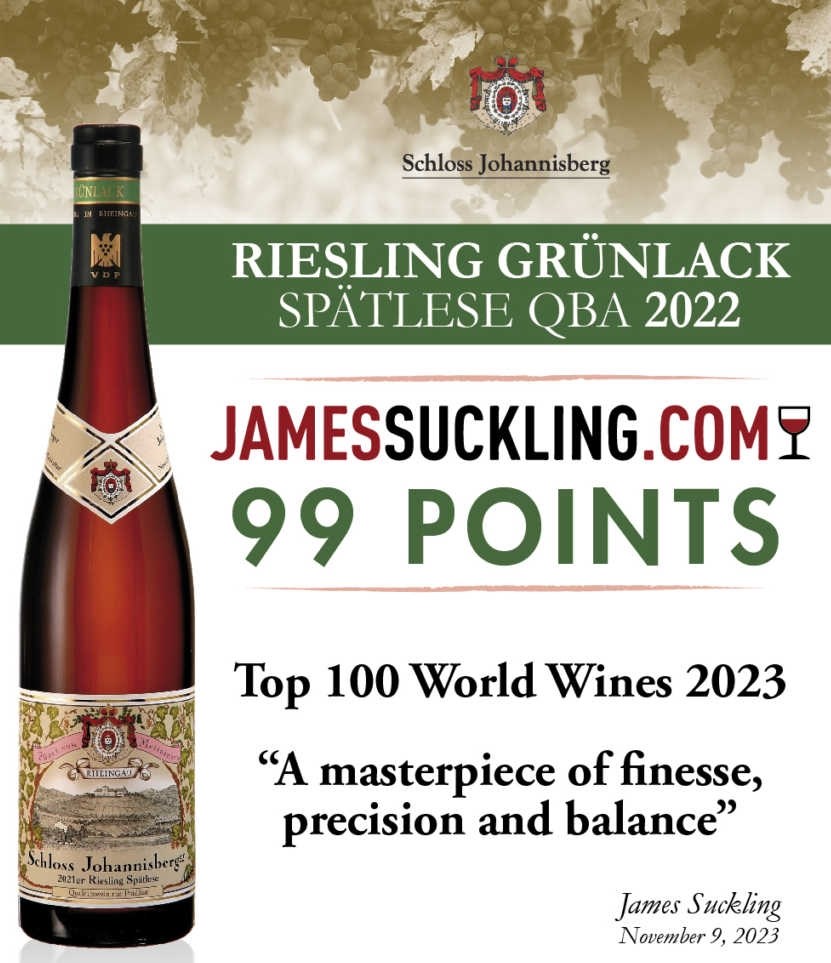
99P/James Suckling: "A masterpiece".
94+p/Parker: "Opens with a clear, intense, aromatic, savory and flinty bouquet of tropical fruits intertwined with almost slatey, in any case, savory and saline notes. It is perfectly ripe and super precise and irresistible. Rich and lush but fine and elegant on the palate. It is incredibly savory, lush and saline. You can't stop swallowing this beauty and picture-book Spätlese. It is mouthwatering without end. This is a fabulous wine of great precision and piquancy! 8% stated alcohol. Natural cork.
Stefan Doktor reports "good results" from a "difficult vintage."
"Rotten and noble rotten berries are taboo at Schloss Johannisberg for all wines below the Spätlese and Auslese predicates. Botrytis cinerea was not even selected in 2022, but magnificent Spätleses were one of the three highlights of the vintage!"
"We harvested quite late in 2022, but only during the breaks in the rain," reports Doktor. His team began picking at the end of September (significantly later than Eva Fricke just a few kilometers to the west) and finished around 20 October.
James Suckling gav 2022 Grünlack 99p/100:
"Taste this before you die! What do you say about a wine that almost literally knocks you off your chair? All the flowers and fruits of the tropics, but so delicate and refined that you can hardly get a grip on it. Such brilliance and such precise balance enables this medium-sweet riesling to defy effortlessly the rules of the category and confidently swim directly against the current of wine fashion. Supernatural freshness at the finish. "
Parker mener dog (som jeg), at 2022 er lidt finere (han gav 92+/100 til 2019).
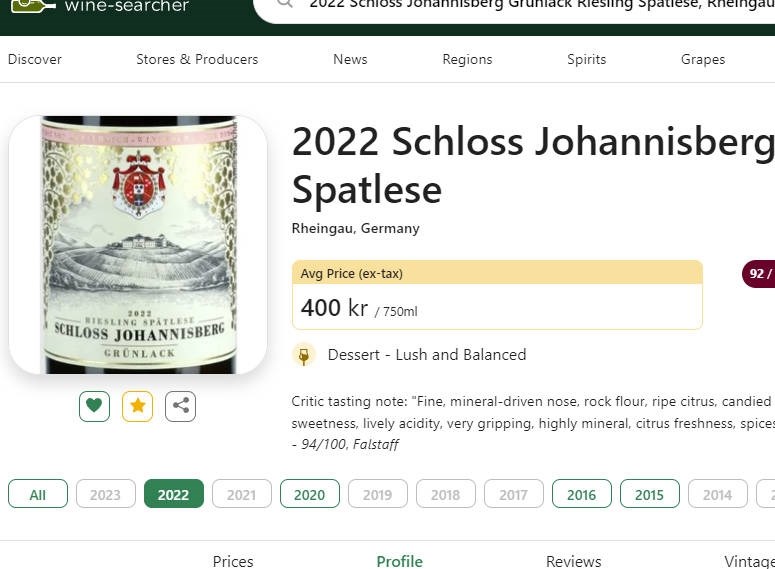
94p/Falstaff: "Fine, mineral-driven nose, rock flour, ripe citrus, candied lime peel, deep and delicate. On the palate with rich sweetness, lively acidity, very gripping, highly mineral, citrus freshness, spices, enormous drive, great ageing potential and great length."
94+p/Parker: "Fabulous", 99p/JamesSuckling, 94p/Falstaff. Price in Denmark; 499, global price 400 (year 22) - really low price for exceptional wine!
A historical classic from one of the world's finest wine castles, which now delivers some of Germany's - and the world's - finest white wines, year after year increasingly finer wines, since the brilliant winemaker/director Stefan Doktor joined in 2008.
The classic great Riesling. A wealth of flowers and tropical fruit in aroma and taste, incredibly elegant, delicate. Medium sweet, but perfectly balanced with crispness and wonderful freshness.
The vineyard has been known since 817 and was a monastery from 1100 until the early 1800s, when it was confiscated and in 1815, after the defeat of Napoleon, given by the Austrian Emperor to Prince von Metternich as a thank you for his work at the Vienna Conference. To this day, 10% of the harvest is given to the Emperor's descendants, the Habsburg family!
The vineyard covers 50 hectares in a block around the castle and is 100% Grosse Lage + ordsteil (i.e. outside classification). The vineyard was the first to be planted 100% with Riesling. In 1770, it was also the place where Spätlese was "invented" by accident, when the monks waited in vain for a courier with the bishop's permission to start the harvest. However, the very late harvest turned out to be the finest wine! A statue pays tribute to the unfortunate courier.
The wine ferments and ages on sour lees in oak barrels, made from oak from 300 hectares of castle forest behind the castle.
Just 40,000 bottles of this wine bottled in Sept. 23. Impressive now, but best 2029-60.
99P/James Suckling: "A masterpiece".
94+p/Parker: "Opens with a clear, intense, aromatic, savory and flinty bouquet of tropical fruits intertwined with almost slatey, in any case, savory and saline notes. It is perfectly ripe and super precise and irresistible. Rich and lush but fine and elegant on the palate. It is incredibly savory, lush and saline. You can't stop swallowing this beauty and picture-book Spätlese. It is mouthwatering without end. This is a fabulous wine of great precision and piquancy! 8% natural cork.
Stefan Doktor reports "good results" from a "difficult vintage."
"Rotten and noble rotten berries are taboo at Schloss Johannisberg for all wines below the Spätlese and Auslese predicates. Botrytis cinerea was not even selected in 2022, but magnificent Spätleses were one of the three highlights of the vintage!"
"We harvested quite late in 2022, but only during the breaks in the rain," reports Doktor. His team began picking at the end of September (significantly later than Eva Fricke just a few kilometers to the west) and finished around 20 October.
James Suckling gave 2022 Grünlack 99p/100:
"Taste this before you die! What do you say about a wine that almost literally knocks you off your chair? All the flowers and fruits of the tropics, but so delicate and refined that you can hardly get a grip on it. Such brilliance and such precise balance enables this medium-sweet riesling to defy effortlessly the rules of the category and confidently swim directly against the current of wine fashion. Supernatural freshness at the finish."
However, Parker believes (like me) that 2022 is a little nicer (he gave 92+/100 to 2019).
94p/Falstaff: "Fine, mineral-driven nose, rock flour, ripe citrus, candied lime peel, deep and delicate. On the palate with rich sweetness, lively acidity, very gripping, highly mineral, citrus freshness, spices, enormous drive, great aging potential and great length."
94+p/Parker: "Favoloso", 99p/JamesSuckling, 94p/Falstaff. Prezzo in Danimarca: 499, prezzo globale 400 (anno 22): prezzo davvero basso per un vino eccezionale!
Un classico storico di uno dei castelli vinicoli più raffinati del mondo, che oggi produce alcuni dei migliori vini bianchi della Germania e del mondo, anno dopo anno sempre più raffinati, da quando nel 2008 è entrato a far parte della famiglia il brillante enologo/direttore Stefan Doktor.
Il classico grande Riesling. Un'abbondanza di fiori e frutti tropicali nel profumo e nel gusto, incredibilmente elegante e delicato. Di media dolcezza, ma perfettamente bilanciato da una freschezza e una freschezza meravigliose.
Il vigneto è noto fin dall'817 e fu un monastero dal 1100 fino ai primi anni del 1800, quando fu confiscato e nel 1815, dopo la sconfitta di Napoleone, donato dall'imperatore austriaco al principe von Metternich come ringraziamento per il suo impegno alla Conferenza di Vienna. Ancora oggi, il 10% del raccolto viene donato ai discendenti dell'imperatore, gli Asburgo!
Il vigneto si estende su 50 ettari in un appezzamento attorno al castello ed è composto al 100% da uve Grosse Lage + ordsteil (ovvero fuori classificazione). Il vigneto fu il primo ad essere piantato al 100% con Riesling. Nel 1770, fu anche il luogo in cui lo Spätlese fu "inventato" per caso, quando i monaci attesero invano un corriere con il permesso del vescovo per iniziare la vendemmia. Tuttavia, la vendemmia tardiva si rivelò il vino migliore! Una statua rende omaggio allo sfortunato corriere.
Il vino fermenta e invecchia su fecce acide in botti di rovere, ricavate da rovere proveniente dai 300 ettari di foresta dietro il castello.
Solo 40.000 bottiglie di questo vino sono state imbottigliate il 23 settembre. Impressionante ora, ma sarà migliore tra il 2029 e il 2060.
99P/James Suckling: "Un capolavoro".
94+p/Parker: "Si apre con un bouquet limpido, intenso, aromatico, saporito e di pietra focaia di frutti tropicali intrecciati con note quasi di ardesia, in ogni caso saporite e saline. È perfettamente maturo, estremamente preciso e irresistibile. Ricco e lussureggiante, ma fine ed elegante al palato. È incredibilmente saporito, lussureggiante e salino. Non si può smettere di deglutire questo Spätlese, bello e da manuale. È un piacere infinito. È un vino favoloso, di grande precisione e piccantezza! 8% sughero naturale.
Stefan Doktor segnala "buoni risultati" da una "annata difficile".
"Allo Schloss Johannisberg, bacche marce e nobili marce sono un tabù per tutti i vini con predicati Spätlese e Auslese. La Botrytis cinerea non è stata nemmeno selezionata nel 2022, ma i magnifici Spätlese sono stati uno dei tre punti forti dell'annata!"
"Abbiamo raccolto piuttosto tardi nel 2022, ma solo durante le pause dalla pioggia", racconta Doktor. Il suo team ha iniziato la raccolta a fine settembre (significativamente più tardi rispetto a Eva Fricke, che si trova a pochi chilometri a ovest) e l'ha terminata intorno al 20 ottobre.
James Suckling ha assegnato al Grünlack del 2022 99p/100:
"Assaggiatelo prima di morire! Che ne dite di un vino che vi fa letteralmente cadere dalla sedia? Tutti i fiori e i frutti dei tropici, ma così delicati e raffinati che difficilmente si riesce a comprenderli. Una tale brillantezza e un equilibrio così preciso permettono a questo Riesling mediamente dolce di sfidare senza sforzo le regole della categoria e di nuotare con sicurezza controcorrente rispetto alle mode del momento. Una freschezza soprannaturale al finale."
Tuttavia, Parker ritiene (come me) che il 2022 sarà un anno un po' più bello (ha dato 92+/100 al 2019).
94p/Falstaff: "Odore fine e minerale, sentori di farina di roccia, agrumi maturi, scorza di lime candita, profondo e delicato. Al palato, con una ricca dolcezza, un'acidità vivace, molto avvolgente, molto minerale, freschezza agrumata, spezie, grande spinta, grande potenziale di invecchiamento e grande persistenza."
94+ p/Parker : « Fabuleux », 99 p/James Suckling, 94 p/Falstaff. Prix au Danemark : 499 ; prix mondial : 400 (millésime 22) – un prix vraiment bas pour un vin exceptionnel !
Un classique historique issu de l'un des plus beaux châteaux viticoles du monde, qui produit désormais certains des meilleurs vins blancs d'Allemagne – et du monde –, des vins de plus en plus fins année après année, depuis l'arrivée du brillant œnologue/directeur Stefan Doktor en 2008.
Un grand Riesling classique. Un bouquet riche en arômes et en saveurs de fleurs et de fruits tropicaux, d'une élégance et d'une finesse exceptionnelles. Moyennement sucré, il offre un équilibre parfait entre vivacité et fraîcheur.
Le vignoble est connu depuis 817 et abrita un monastère de 1100 jusqu'au début du XIXe siècle, date à laquelle il fut confisqué. En 1815, après la défaite de Napoléon, l'empereur d'Autriche l'offrit au prince von Metternich en remerciement de son rôle à la conférence de Vienne. Aujourd'hui encore, 10 % de la récolte sont reversés aux descendants de l'empereur, la famille des Habsbourg.
Le vignoble s'étend sur 50 hectares autour du château et est classé 100 % Grosse Lage + ordsteil (hors appellation). Il fut le premier vignoble planté exclusivement de Riesling. En 1770, c'est également là que le Spätlese fut « inventé » par hasard : les moines attendaient en vain un messager muni de l'autorisation de l'évêque pour commencer les vendanges. Or, ces vendanges très tardives donnèrent naissance à un vin exceptionnel ! Une statue rend hommage à ce malheureux messager.
Le vin fermente et vieillit sur lies acides dans des fûts de chêne, fabriqués à partir de chêne provenant de 300 hectares de forêt située derrière le château.
Seulement 40 000 bouteilles de ce vin ont été mises en bouteille le 23 septembre. Impressionnant dès maintenant, mais à son apogée entre 2029 et 2060.
99P/James Suckling : « Un chef-d'œuvre ».
94+ points/Parker : « Ce vin s’ouvre sur un bouquet net, intense et aromatique, aux notes savoureuses et minérales de fruits tropicaux, mêlées à des nuances presque ardoisées, en tout cas savoureuses et salines. Parfaitement mûr, d’une précision remarquable, il est irrésistible. Riche et opulent, il se révèle fin et élégant en bouche. Incroyablement savoureux, onctueux et salin. Impossible de se lasser de ce Spätlese d’une telle beauté, digne d’une carte postale. Un véritable délice. Un vin fabuleux, d’une grande précision et d’une belle vivacité ! 8 % de liège naturel. »
Stefan Doktor annonce de « bons résultats » pour un « millésime difficile ».
« À Schloss Johannisberg, les baies pourries et les baies noblement pourries sont taboues pour tous les vins ne portant pas les appellations Spätlese et Auslese. Botrytis cinerea n'a même pas été sélectionné en 2022, mais les magnifiques Spätlese ont été l'un des trois points forts du millésime ! »
« Nous avons récolté assez tard en 2022, mais seulement pendant les accalmies », rapporte Doktor. Son équipe a commencé la cueillette fin septembre (nettement plus tard qu'Eva Fricke, à quelques kilomètres à l'ouest) et l'a terminée vers le 20 octobre.
James Suckling a attribué la note de 99p/100 au Grünlack 2022 :
Goûtez-le avant de mourir ! Que dire d'un vin qui vous laisse littéralement sans voix ? Tous les arômes de fleurs et de fruits tropicaux, mais avec une telle délicatesse et un tel raffinement qu'il est presque imperceptible. Une telle brillance et un tel équilibre permettent à ce riesling demi-doux de défier sans effort les règles de son appellation et de nager avec assurance à contre-courant des tendances actuelles. Une fraîcheur surnaturelle en finale.
Cependant, Parker pense (comme moi) que 2022 est un peu plus agréable (il a donné une note de 92+/100 à 2019).
94 points/Falstaff : « Nez fin et minéral, farine de roche, agrumes mûrs, zeste de citron vert confit, profond et délicat. En bouche, une riche douceur, une acidité vive, une texture très tendue, une minéralité marquée, une fraîcheur d’agrumes, des épices, une puissance impressionnante, un excellent potentiel de garde et une grande longueur. »

 Protection de l'acheteur ShareWine