Suckling (98 point): Plenty of red fruit and tar here with bark and mushroom as well. It’s full-bodied, yet tight and polished on the palate. Tight finish. Tar and burnt citrus to the fruit in the aftertaste. One of the best wines from here in years, this needs some bottle age to open and soften. Try after 2026.
Decanter (96 point): Among the 27 hectares of Conterno Fantino is Vigna Ped, an east-facing cru within the Mosconi MGA. Similar to Ginestra, in 2017 it seems to be a bit rounder and less austere. The wine undergoes malolactic fermentation naturally in the spring. It displays intense leafy lightness with wild strawberry puree and liquorice root, but also whiffs of truffle and cocoa powder. The attack is firm and assertive, with both acidity and tannins - which are large, grainy and ripe. The structure is well balanced by fruit concentration, vibrancy and complexity. Despite its meatiness, it's not ready to drink yet. For the long haul.
Vinous (95 point): The 2017 Barolo Mosconi Vigna Ped is deep, resonant and expansive, as wines from this site tend to be. In this tasting, the Mosconi is wonderfully deep. Its stature alone is compelling. And yet there is so much to the Mosconi. Readers will find a Barolo that melds together a rich, racy expression of fruit with plenty of structure that wraps everything together. Rich red fruit, blood orange, tar, spice and cedar build as the 2017 gains volume through to the finish.
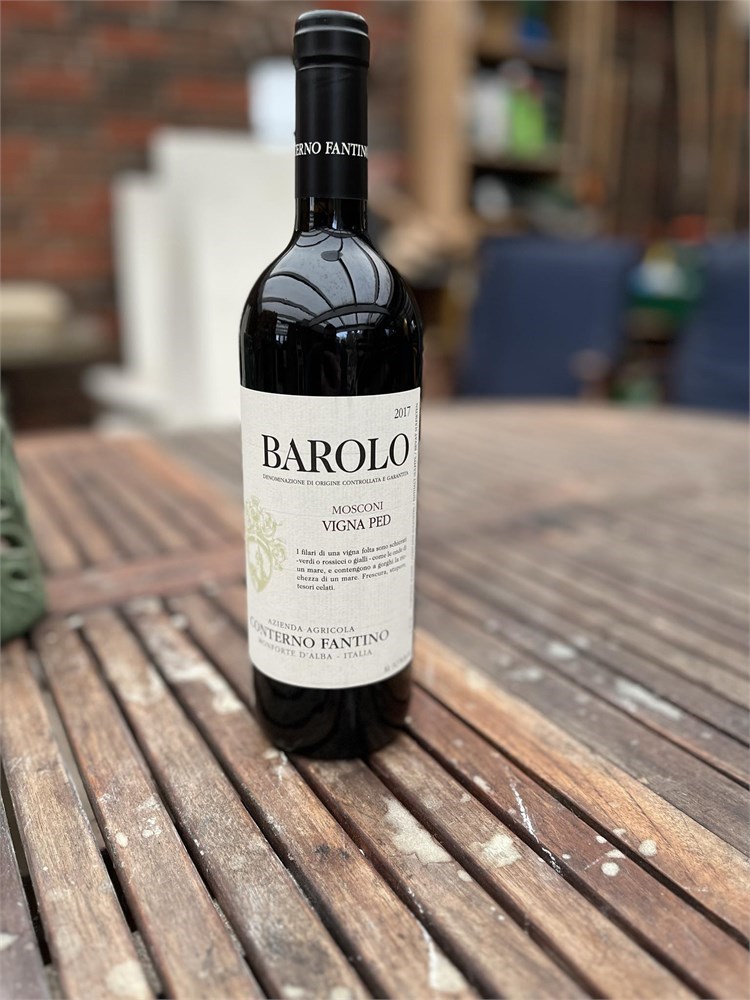
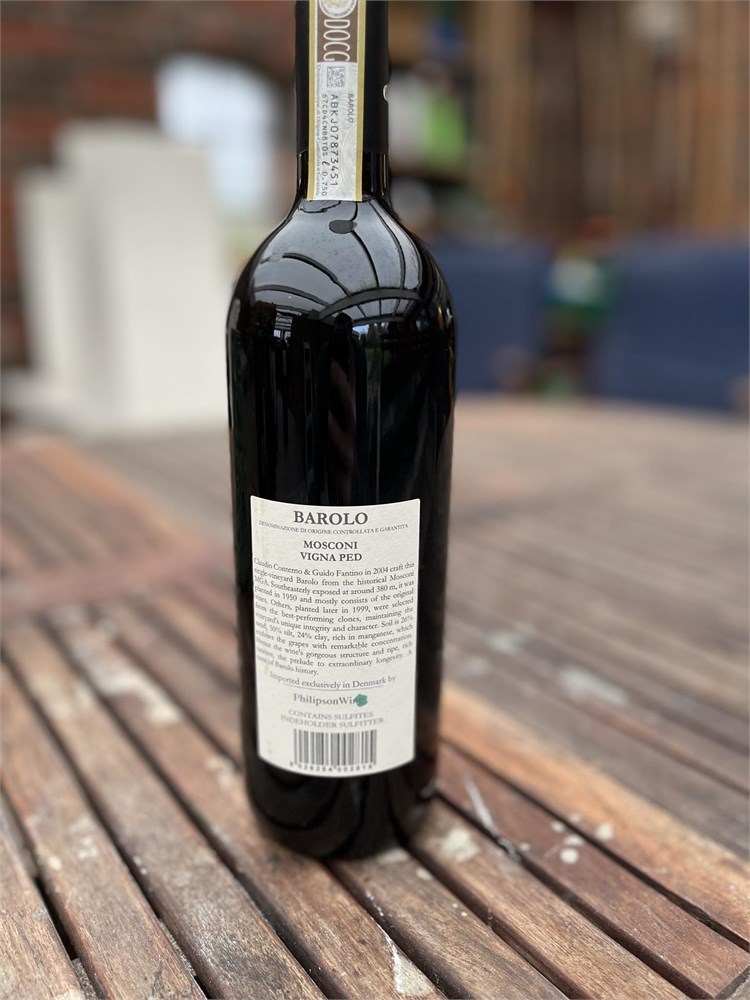
Robert Parker (94 point): The 2017 Barolo Mosconi Vigna Ped sources its fruit from a small vineyard plot measuring less than one hectare that is composed of sand, silt and clay soils. This special wine shows dark fruit with cherry and blackcurrant, all followed by spice, tar and earth. The hot and dry growing conditions in 2017 make for extra intensity and concentration, with firm tannins that hold it all together. The cooling altitudes at 360 to 380 meters above sea level and the general conditions of Monteforte d'Alba mean that this wine shows good integration.
Suckling (98 points): Plenty of red fruit and tar here with bark and mushroom as well. It's full-bodied, yet tight and polished on the palate. Tight finish. Tar and burnt citrus to the fruit in the aftertaste. One of the best wines from here in years, this needs some bottle age to open and soften. Try after 2026.
Decanter (96 points): Among the 27 hectares of Conterno Fantino is Vigna Ped, an east-facing cru within the Mosconi MGA. Similar to Ginestra, in 2017 it seems to be a bit rounder and less austere. The wine undergoes malolactic fermentation naturally in the spring. It displays intense leafy lightness with wild strawberry puree and liquorice root, but also whiffs of truffle and cocoa powder. The attack is firm and assertive, with both acidity and tannins - which are large, grainy and ripe. The structure is well balanced by fruit concentration, vibrancy and complexity. Despite its meatiness, it's not ready to drink yet. For the long haul.
Vinous (95 points): The 2017 Barolo Mosconi Vigna Ped is deep, resonant and expansive, as wines from this site tend to be. In this tasting, the Mosconi is wonderfully deep. Its stature alone is compelling. And yet there is so much to the Mosconi. Readers will find a Barolo that melds together a rich, racy expression of fruit with plenty of structure that wraps everything together. Rich red fruit, blood orange, tar, spice and cedar build as the 2017 gains volume through to the finish.
Robert Parker (94 points): The 2017 Barolo Mosconi Vigna Ped sources its fruit from a small vineyard plot measuring less than one hectare that is composed of sand, silt and clay soils. This special wine shows dark fruit with cherry and blackcurrant, all followed by spice, tar and earth. The hot and dry growing conditions in 2017 make for extra intensity and concentration, with firm tannins that hold it all together. The cooling altitudes at 360 to 380 meters above sea level and the general conditions of Monteforte d'Alba mean that this wine shows good integration.
Suckling (98 punti): Tanta frutta rossa e catrame, con note di corteccia e funghi. È corposo, ma al palato è teso e raffinato. Finale teso. Nel retrogusto si percepiscono note di catrame e agrumi bruciati. Uno dei migliori vini di questa zona da anni, ha bisogno di un po' di invecchiamento in bottiglia per aprirsi e ammorbidirsi. Da provare dopo il 2026.
Decanter (96 punti): Tra i 27 ettari di Conterno Fantino c'è Vigna Ped, un cru esposto a est all'interno della MGA Mosconi. Simile a Ginestra, nel 2017 sembra essere un po' più rotondo e meno austero. Il vino svolge la fermentazione malolattica naturalmente in primavera. Mostra un'intensa leggerezza fogliare con purea di fragole di bosco e radice di liquirizia, ma anche sentori di tartufo e polvere di cacao. L'attacco è deciso e deciso, con acidità e tannini, che sono ampi, granulosi e maturi. La struttura è ben bilanciata dalla concentrazione del frutto, dalla vivacità e dalla complessità. Nonostante la sua carnosità, non è ancora pronto da bere. Per il lungo periodo.
Vinoso (95 punti): Il Barolo Mosconi Vigna Ped 2017 è profondo, risonante e ampio, come tendono ad essere i vini di questa zona. In questa degustazione, il Mosconi è meravigliosamente profondo. La sua statura è già di per sé avvincente. Eppure, il Mosconi ha così tanto da offrire. I lettori troveranno un Barolo che fonde un'espressione fruttata ricca e vivace con una struttura generosa che avvolge il tutto. Ricchi frutti rossi, arancia rossa, catrame, spezie e cedro si sviluppano mentre il 2017 acquista volume fino al finale.
Robert Parker (94 punti): Il Barolo Mosconi Vigna Ped 2017 trae le sue uve da un piccolo appezzamento di vigneto di meno di un ettaro, composto da terreni sabbiosi, limo e argilla. Questo vino speciale presenta sentori di frutta scura con ciliegia e ribes nero, seguiti da spezie, catrame e terra. Le condizioni di crescita calde e asciutte del 2017 conferiscono maggiore intensità e concentrazione, con tannini decisi che tengono insieme il tutto. Le altitudini più fresche, tra i 360 e i 380 metri sul livello del mare, e le condizioni generali di Monteforte d'Alba, fanno sì che questo vino mostri una buona integrazione.
Suckling (98 points) : Ce vin offre une belle abondance de fruits rouges et de goudron, avec des notes d'écorce et de champignon. Corsé, il se distingue par sa structure tendue et élégante en bouche. La finale est courte et précise, avec des arômes de goudron et d'agrumes brûlés qui se mêlent aux fruits. Figurant parmi les meilleurs vins de ce domaine depuis des années, il gagnera à vieillir en bouteille pour s'épanouir et s'assouplir. À déguster après 2026.
Decanter (96 points) : Parmi les 27 hectares de Conterno Fantino se trouve Vigna Ped, un cru exposé à l’est au sein de l’appellation Mosconi MGA. À l’instar de Ginestra, ce vin semble, en 2017, plus rond et moins austère. La fermentation malolactique a lieu naturellement au printemps. Il offre une intense fraîcheur végétale, avec des arômes de purée de fraises des bois et de racine de réglisse, ainsi que des notes de truffe et de cacao en poudre. L’attaque est franche et affirmée, avec une belle acidité et des tanins amples, granuleux et mûrs. La structure est harmonieusement équilibrée par la concentration du fruit, sa vivacité et sa complexité. Malgré sa puissance, il n’est pas encore prêt à être dégusté. Un vin de garde.
Vinous (95 points) : Le Barolo Mosconi Vigna Ped 2017 est profond, ample et généreux, à l’image des vins issus de ce terroir. Lors de cette dégustation, le Mosconi s’est révélé d’une profondeur remarquable. Sa stature à elle seule est saisissante. Et pourtant, ce Mosconi recèle bien d’autres subtilités. Les lecteurs découvriront un Barolo qui allie une expression fruitée riche et racée à une structure ample qui harmonise l’ensemble. Des arômes de fruits rouges mûrs, d’orange sanguine, de goudron, d’épices et de cèdre se développent progressivement jusqu’à la finale.
Robert Parker (94 points) : Le Barolo Mosconi Vigna Ped 2017 provient d'une petite parcelle de moins d'un hectare, composée de sols sableux, limoneux et argileux. Ce vin d'exception révèle des arômes de fruits noirs, de cerise et de cassis, suivis de notes d'épices, de goudron et de terre. Les conditions climatiques chaudes et sèches de 2017 lui confèrent une intensité et une concentration remarquables, soutenues par des tanins fermes qui lui assurent une belle structure. La fraîcheur de l'altitude, entre 360 et 380 mètres, et les conditions climatiques de Monteforte d'Alba contribuent à l'harmonie de ce vin.

 ShareWine Buyer's Protection